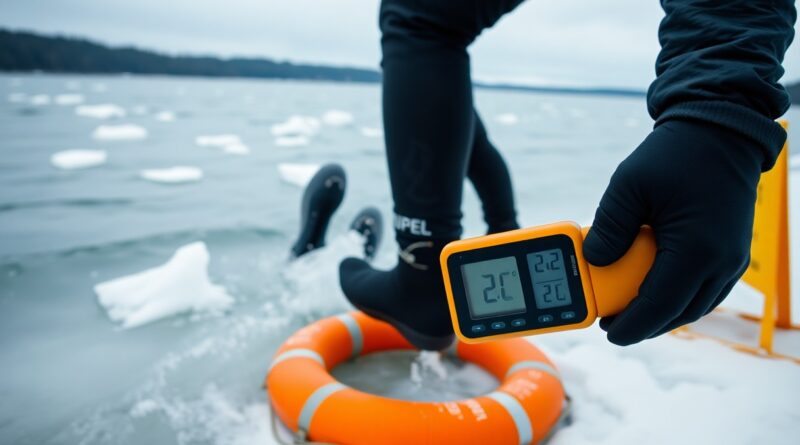
Cold Water Shock Explained – What Happens When You Enter an Icy Lake {Educational, science‑based article optimized for safety‑related searches.
It’s important you know that on sudden immersion your body reflexively triggers a violent gasp and uncontrollable hyperventilation, spiking heart rate and blood pressure, which can cause rapid drowning or cardiac arrest; after that, cold incapacitation and hypothermia impair swimming. By staying calm, floating to control breathing and calling for help you create the best chance of survival-these are the key actions that save lives.
Key Takeaways:
- Cold water shock causes an immediate involuntary gasp and rapid breathing, raising drowning risk and can trigger dangerous heart rhythm changes in susceptible people.
- Cold rapidly reduces muscle strength and coordination, making effective swimming and self-rescue difficult within minutes; controlling breathing and floating on your back buys time.
- Prevention saves lives: wear a lifejacket, avoid solo or unacclimatized entry into icy water, call for help if immersion occurs, and seek medical attention after rescue.
Understanding Cold Water Shock
When you hit icy water, the immediate involuntary gasp and sudden hyperventilation can flood your airway within seconds; this initial phase is the deadliest, with most life‑threatening events occurring in the first minute. You should treat any unexpected immersion as an emergency and consult official guidance on Cold water dangers for prevention and rescue steps.
Definition and Mechanism
Cold water shock is a rapid reflex triggered when cold water contacts your face and torso, typically below about 15°C (59°F); within 1-3 seconds you can gasp, then hyperventilate, raising drowning risk. Skin cooling activates sympathetic nerves, causing a surge in breathing and blood pressure that can override deliberate breathing and swimming efforts, so your immediate response determines whether you stay afloat or inhale water.
Physiological Responses
Your cardiovascular system responds with peripheral vasoconstriction and a sympathetic surge that often increases heart rate and blood pressure sharply; this can precipitate arrhythmias, especially if you have heart disease. Muscular cold shock reduces limb coordination and strength, degrading swimming ability within the first minute, and arrhythmia or aspiration are common pathways to rapid incapacitation.
More specifically, the gasp and rapid breathing can make you inhale water before you can control breathing; at the same time, blood is shunted from your limbs to your core, increasing cardiac load. In practical terms, you may only retain functional swimming ability for tens of seconds to a few minutes, and while hypothermia develops over longer exposure (typically tens of minutes to hours), the initial cardiorespiratory collapse is the immediate threat to survival.
Stages of Cold Water Shock
You move rapidly from an immediate gasp reflex and uncontrolled breathing into a phase of restricted movement and rising cardiac strain; within the first minute your risk of drowning is highest. After that, you face loss of fine motor control over 5-10 minutes and hypothermia over tens of minutes. For practical guidance on prevention and preparation see Cold Water Safety | Washington State Parks.
Initial Reaction
Seconds after immersion you experience an involuntary gasp and rapid hyperventilation that can quadruple breath rate, plus a surge in heart rate and blood pressure. If you inhale water or panic, your chance of drowning spikes in the first 30-60 seconds. Try to control breathing and keep your airway clear; doing so markedly improves your immediate survival odds.
Submersion Response
Once submerged, you may be unable to hold your breath long enough to avoid aspiration; voluntary breathing control collapses and water can enter the lungs, causing rapid incapacitation. Your muscles cool quickly-fine motor skills fail within minutes-so performing complex self‑rescue becomes unlikely without flotation. Keeping your airway above water and wearing a PFD are lifesaving priorities.
Physiologically, immersion triggers peripheral vasoconstriction and central blood shunting that raise cardiac workload and can provoke arrhythmia if you have heart disease. You typically retain useful motor function for only about 5-15 minutes depending on water temperature and clothing. If you can float on your back and control breathing, you extend survival time markedly while awaiting rescue or rewarming.
Risks and Dangers
You face several overlapping hazards: the forced gasp and hyperventilation increase drowning risk, acute autonomic reactions can trigger cardiac arrhythmia especially if you have heart disease, and rapid heat loss drives progressive incapacitation. In cold lakes, people commonly lose effective swimming ability within minutes and may become unconscious from hypothermia or cold incapacitation; combined, these make drowning the primary immediate danger.
Hypothermia
Your core temperature can fall rapidly in water; mild hypothermia is 32-35°C, moderate 28-32°C and severe <28°C. Because water removes heat about 25 times faster than air, immersion in 0-5°C water can lower your core temperature to <35°C within 30-60 minutes, accelerating cognitive decline, loss of consciousness, and the risk of fatal outcomes if you cannot exit or rewarm.
Loss of Coordination
Within minutes your fingers and arms lose fine motor control as nerve conduction slows and muscle power drops; grip strength can fall by roughly half within 10-20 minutes of cold immersion. That means you may be unable to swim, hold a rope, or remove heavy clothing, sharply increasing the chance you cannot help yourself or be rescued.
Mechanically, peripheral vasoconstriction preserves your core but reduces hand dexterity and lowers muscle contractile speed; fast-twitch fibers fatigue sooner when cold. In rescue reports victims who initially reached flotation often couldn’t maintain a grip after 10-15 minutes, so what begins as manageable exposure frequently becomes fatal once coordination and strength fail.
Safety Precautions
You must treat cold-water entry as high risk: involuntary gasping can occur within 1-3 seconds and drowning risk peaks in the first minute, while swimming failure often starts after 10-30 minutes. Always have a charged phone and at least one competent person on shore, wear a buoyant lifejacket or drysuit, avoid alcohol, and plan a clear exit route with warm clothing and shelter ready so you can get out and rewarm within minutes.
Preparing for Icy Water Exposure
Before you enter or approach icy water, test conditions and plan: check ice thickness (approx. 10 cm / 4 in for one person on clear ice), avoid slushy or discolored areas, and set up a tether and throw bag. Wear a PFD, carry a whistle and waterproof phone, preposition dry clothes and a thermal blanket within arm’s reach, and only perform short, supervised immersions if you’ve trained for cold exposure.
Rescue Strategies
If someone is in the water, call emergency services and follow the “reach, throw, row, go” sequence: you first reach with a pole or ladder, then throw a buoyant aid, use a boat if available, and enter the water only as a last resort. Use a rope or throw bag to maintain contact and do not enter the water unless you are trained, properly equipped, and tethered-untrained rescuers commonly become additional victims.
When you perform a reach, lie flat to distribute weight and extend a pole; anchor yourself to avoid falling in. For throws, use an underhand toss aimed just past the victim so they can grab the line. If you must go in, don a lifejacket and tether, approach from behind to control the head and keep the airway clear, then get the person ashore quickly. Once out, remove wet clothing, insulate with dry layers or a blanket, and seek medical attention immediately.

Myths and Misconceptions
Many people downplay the immediate risk, saying you’ll acclimate or that hypothermia is the main danger; those ideas are misleading. The gasp reflex begins in 1-3 seconds and uncontrolled breathing makes the first minute the highest drowning risk, while hypothermia usually develops over tens of minutes to hours. The instant physiological shock, including potential arrhythmia, is the primary early killer, so preventive measures like a lifejacket and breath control are imperative to reduce early fatalities.
Common Misunderstandings
You might think swimming hard helps; vigorous movement actually increases heat loss and can hasten muscle incapacitation within 10-30 minutes in near‑freezing water. Another mistaken belief is that strong swimmers are immune – incident analyses show many victims were experienced swimmers overcome by the initial gasp or sudden cardiac events. Also, quick wading is riskier than expected because cold shock can occur at temperatures below about 15°C.
Fact vs. Fiction
Fact: the early threat is a rapid respiratory and cardiac response within seconds; fiction: a brief dip is harmless. You should know the gasp and hyperventilation can cause drowning even in shallow water, and facial immersion can trigger arrhythmia in susceptible people. Positive: wearing a PFD and practising cold‑water breathing control before exposure markedly improves your survival odds.
In more detail, the involuntary ventilatory surge typically lasts about 30-90 seconds, during which you are most likely to inhale water; after that your limb control deteriorates and documented rescue reports show swimming ability often fails within 10-15 minutes in very cold water. Core temperature decline depends on water temperature and insulation-near‑freezing water can drop your core to below 35°C within roughly 30-60 minutes without protective clothing. Facial immersion or sudden cold exposure also provokes a catecholamine surge that can produce arrhythmias within seconds, especially if you have underlying heart disease; therefore the safest immediate actions you can take are to control your breathing, float on your back to compose yourself, and wear a PFD whenever there’s a risk of cold immersion.
Real-Life Case Studies
You encounter clear patterns in real incidents: initial cold water shock within seconds, rapid loss of coordination, and either quick rescue or fatal outcome. Below are representative case studies with water temperatures, timings, and outcomes so you can see how icy lake entries translate to specific risks and what factors – like wearing a lifejacket or rescue time – changed results.
- Case 1 – Thin ice fall: Adult fell through 2°C lake, experienced immediate gasp reflex and inhalation; unconsciousness occurred within ~4 minutes; body recovered after 1.5 hours. No lifejacket was worn; primary cause listed as drowning following aspiration.
- Case 2 – Capsized kayaker: Paddler in 6°C water capsized, hyperventilated but kept airway clear thanks to a lifejacket; rescued by bystanders at 8 minutes with mild hypothermia; full recovery after rewarming and observation.
- Case 3 – Open-water swimmer: Recreational swimmer entered 12°C lake without floatation; within 3 minutes showed marked loss of limb control and could not self-rescue; rescue at 6 minutes required towing and active rewarming; outcome: non-fatal, hospital observation.
- Case 4 – Night dock fall: Person fell into <4°C water at night, immediate dyspnea and ventricular arrhythmia within minutes; CPR and advanced life support unsuccessful; time to EMS >20 minutes correlated with fatal outcome.
- Case 5 – Controlled acclimation (positive): Trained responder performed repeated 60-90 second immersions at 10°C with progressive cold-acclimation and breathing control; initial gasp reduced and cold shock responses attenuated, enabling safe exit and recovery.
Incidents of Cold Water Shock
You will find that most incidents show the same timeline: an immediate gasp and hyperventilation phase in the first 60-90 seconds, followed by declining motor control over 3-10 minutes, and progressive hypothermia affecting consciousness from roughly 10-30 minutes depending on water temperature and clothing.
Lessons Learned
You should treat sudden cold immersion as a medical and logistical emergency: wearing a lifejacket, avoiding lone or night-time swims, and minimizing time in the water strongly reduce death risk; rapid flotation and rescue within the first 5-10 minutes often determine survival versus fatal outcomes.
More specifically, you can apply these lessons: always wear appropriate flotation, rehearse the “float to live” response so you can control breathing during the first stunned seconds, prioritize calling for immediate help, and manage post-rescue rewarmed care (remove wet clothing, use blankets, avoid rapid rewarming of the extremities if transport is delayed). Strong adherence to these steps repeatedly improves outcomes in the case studies above.
Final Words
As a reminder you should treat sudden immersion in icy water as a medical and navigational emergency: your gasp reflex, loss of breath control, and rapid cooling can incapacitate you fast. Learn practical steps and protective measures at Cold Shock: 5 Rules for Safe Cold-Water Boating to reduce risk and increase your chances of survival.
FAQ
Q: What is cold water shock and what happens to the body when you suddenly enter an icy lake?
A: Cold water shock is the rapid physiological response to sudden immersion in very cold water. Within seconds a powerful involuntary gasp and hyperventilation occur, heart rate and blood pressure spike, and peripheral blood vessels constrict; these responses increase the risk of inhaling water and of cardiac arrhythmia. In the first 1-3 minutes this respiratory phase is dominant and can cause immediate drowning even in strong swimmers; over the next 3-30 minutes muscle cooling impairs coordination and strength, producing swim failure; beyond that core temperature falls and hypothermia develops. Risk is higher for people with heart disease, children, older adults, alcohol or drug impairment, and those without flotation or thermal protection.
Q: How long can someone survive in icy water, and how is cold water shock different from hypothermia?
A: Survival time varies with water temperature, body size, clothing, and flotation, but typical stages are: 0-3 minutes (cold shock: gasp and uncontrolled breathing), 3-30 minutes (cold incapacitation: loss of muscle function and swimming ability), and 30+ minutes (progressive hypothermia leading to unconsciousness and cardiac arrest). In near‑freezing water survival until unconsciousness can be measured in tens of minutes rather than hours. Cold water shock is the immediate cardio‑respiratory response that can cause drowning quickly; hypothermia is the slower drop in core temperature that impairs consciousness and vital functions over a longer period. Flotation and insulation greatly extend functional survival time.
Q: What should a swimmer and bystanders do immediately if cold water shock occurs?
A: The swimmer should try to control breathing, float on their back or adopt a heat‑conserving posture (rail position if not wearing a lifejacket), avoid frantic swimming, and signal for help. If wearing a lifejacket use it to stay afloat and keep the airway clear. Bystanders should follow the reach‑throw‑don’t‑go‑in principle: extend a pole or rope, throw a buoyant aid, or use a boat; only enter the water if specially trained. Call emergency services immediately, keep the person horizontal and dry once out of the water, remove wet clothing and insulate with blankets, and begin CPR if the person is unresponsive and not breathing. If available and trained, use an AED for cardiac arrest. Rapid, calm actions focused on flotation, airway protection, and contacting emergency responders save lives.
