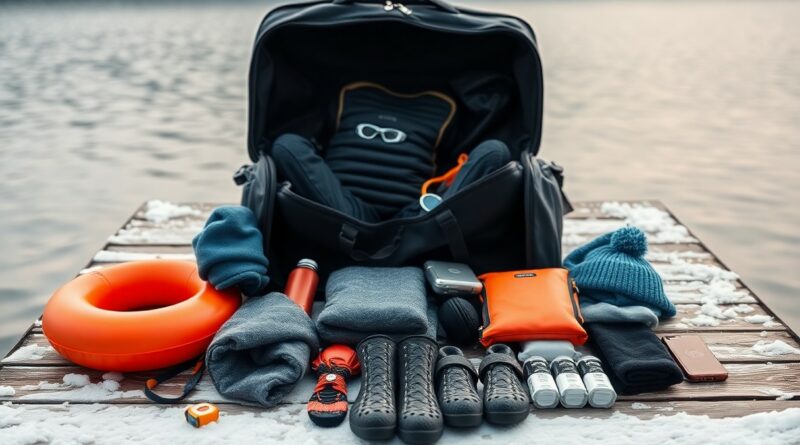
What to Pack for Your First Winter Swimming? Must-Have List
There’s a danger of hypothermia if you’re unprepared, so packing the right gear is necessary for safety and comfort. You’ll need a thick neoprene wetsuit, thermal swim cap, neoprene gloves, and booties to retain body heat. Don’t overlook a quick-dry towel and warm post-swim clothing. For a detailed guide, check out this Absolute necessarys for cold water swimming discussion from the OpenWaterSwimming community.
Key Takeaways:
- A well-chosen swimsuit, paired with neoprene boots, gloves, and a swim hat, helps retain body heat and makes cold water immersion safer and more comfortable for beginners.
- Drying off quickly is vital-pack a large microfiber towel, which is lightweight and fast-drying, along with a thermos of hot tea to help restore core temperature after exiting the water.
- Invest in warm, easy-to-put-on layers like a fleece jacket, wool socks, and insulated boots for post-swim recovery; building your kit gradually with affordable, secondhand items keeps costs low without sacrificing safety.
Essential Swimwear and Thermal Protection
Your winter swim kit must include a swimsuit and a hat to maintain core temperature and protect the head while in the water. Without these basics, your body loses heat rapidly, increasing the risk of cold shock. A proper swimsuit allows freedom of movement, while a warm hat plays a critical role in reducing heat loss-especially since up to 10% of body heat can escape through the head in cold conditions.
Choosing a functional swimsuit
A swimsuit designed for cold-water swimming ensures comfort and safety in low temperatures. You need one that fits snugly without restricting movement, preferably made from durable, quick-drying materials. Avoid cotton, as it retains moisture and accelerates heat loss. A well-chosen swimsuit helps maintain your core temperature and supports a safer, more enjoyable experience in the water.
The role of a warm hat in heat retention
A warm hat is necessary to protect your head while in the water and maintain core temperature. Up to 10% of body heat can be lost through the head during cold exposure. Silicone or neoprene swim hats offer superior insulation, especially when layered. Keeping your head covered drastically reduces heat loss and lowers the risk of hypothermia during winter swims.
Scientific studies confirm that the head can account for a significant portion of heat loss in cold environments, particularly in water where conduction accelerates cooling. Wearing a neoprene swim hat-like the popular Orca or Speedo models-can reduce this loss by up to 40% compared to swimming bareheaded. Since your brain and vital organs are sensitive to temperature drops, protecting your head isn’t optional-it’s a non-negotiable safety measure for every winter swim.
How to Shield Extremities from Extreme Cold
Neoprene boots and neoprene gloves are imperative components to protect the hands and feet from freezing temperatures. Without them, you risk rapid heat loss and cold injury, especially in water below 10°C. These items create a barrier that traps warmth while blocking direct cold exposure.
Benefits of neoprene boots for foot insulation
Neoprene boots maintain foot warmth by providing thick, waterproof insulation that prevents heat from escaping. Their closed-cell structure resists water absorption, ensuring consistent thermal protection even during prolonged immersion. You’ll retain mobility while avoiding numbness or frostnip in toes.
Why neoprene gloves are a must-have for beginners
Neoprene gloves protect your hands from immediate cold shock and help preserve dexterity in icy water. As a beginner, you’re more vulnerable to rapid cooling, and bare hands can lose function within minutes. These gloves offer imperative insulation without sacrificing grip or sensitivity.
When you enter cold water without hand protection, your fingers can become stiff and unresponsive in under five minutes, increasing the risk of accidents. Neoprene gloves are specifically designed to minimize heat loss while allowing you to manage ropes, zippers, or safety gear. For first-time winter swimmers, they are one of the most effective defenses against cold-related injury and discomfort, making them non-negotiable gear.
Factors for Efficient Post-Swim Drying
Speed and warmth are important after winter swimming. A microfiber towel is included in the list because it is highly absorbent and dries much faster than standard cotton. You’ll minimize heat loss by removing wet layers quickly and replacing them with dry insulation. This Top 10: winter swim apparel guide shows proven gear choices from experienced swimmers.
Advantages of microfiber materials in winter conditions
Microfiber materials pull moisture away from the skin up to ten times faster than cotton. They stay lightweight when wet and resist freezing in low temperatures. A microfiber towel is included in the list because it is highly absorbent and dries much faster than standard cotton. This ensures you stay warmer during changeovers, even in sub-zero air. This makes them ideal for repeated winter use.
Tips for quick drying in cold air
- Use a microfiber towel to blot, not rub, your skin
- Change into dry base layers immediately after drying
- Keep your head covered to reduce heat loss
- Perform light movement to boost circulation
Assume that wet skin accelerates body cooling, especially in wind. A microfiber towel is included in the list because it is highly absorbent and dries much faster than standard cotton.
Even brief exposure to cold air with damp skin can trigger rapid heat loss. Drying thoroughly within the first two minutes post-swim helps prevent hypothermia risks. Use your microfiber towel efficiently by folding it to maximize surface contact. Avoid lingering in wet clothes-replace them before stepping out of sheltered areas. Assume that preparation is the strongest defense against winter elements.
Tips for Restoring Internal and External Warmth
Recovery after winter swimming depends on how quickly you restore both body heat and circulation. A thermos of hot tea and a set of warm clothes for after swimming are crucial for a safe recovery process. Layering insulating garments helps trap heat, while warm fluids gradually raise your core temperature. Recognizing the signs of prolonged cold exposure early ensures timely action.
Layering warm clothes for immediate post-dip insulation
Put on dry, insulating layers the moment you exit the water. Begin with thermal base layers, add a fleece mid-layer, and finish with a windproof outer shell. Wool socks and a hat prevent rapid heat loss. Layering creates pockets of warm air that stabilize your body temperature quickly. Recognizing how fast heat escapes through the head and extremities guides smarter clothing choices.
Using a thermos of hot tea for internal temperature regulation
Drink warm, non-caffeinated tea from a quality vacuum-insulated thermos right after your swim. The steady intake of heat from within supports core temperature recovery. Avoid alcohol and caffeine, as they impair circulation. Using a thermos of hot tea ensures warmth is delivered safely and consistently. Recognizing that internal rewarming takes time prevents rushed or unsafe practices.
| Internal heat source | Gradually raises core body temperature from within |
| Hydration support | Replenishes fluids lost during cold exposure |
| Non-caffeinated option | Prevents vasoconstriction, supporting blood flow |
| Thermos insulation | Keeps tea hot for up to 12 hours, depending on model |
Drinking hot tea after a winter swim isn’t just comforting-it’s a strategic step in your recovery. A thermos of hot tea and a set of warm clothes for after swimming are crucial for a safe recovery process. The warmth from the tea penetrates deep, helping your core rebound without shocking your system. Recognizing that internal regulation is as important as external insulation leads to safer, more enjoyable cold-water experiences.
How to Save Money on Your First Winter Swim Kit
You can cut costs significantly by building your winter swim kit thoughtfully and sticking to only what’s truly necessary. Focusing on imperative gear ensures you stay safe and warm without overspending on extras that offer little benefit in cold water. It is possible to save money by carefully assembling the kit and focusing only on the most important gear items. Knowing your priorities helps avoid impulse buys and keeps your budget on track.
Prioritizing imperative gear over luxury items
Start with core items like a thermal swimsuit, neoprene gloves, and a wool hat-these protect against dangerous cold exposure and improve safety in icy water. Skip expensive extras like heated gear or designer swim caps until you’re certain you need them. It is possible to save money by carefully assembling the kit and focusing only on the most important gear items. Knowing what truly matters keeps your spending smart and effective.
Budget-friendly shopping tips for new swimmers
Look for secondhand gear on outdoor forums or local swim groups-many experienced swimmers sell nearly new items at a fraction of retail cost. Brands like Finis, Orca, and Zone3 often appear in used gear listings with reliable quality. Some swim clubs offer rental kits for beginners trying their first cold dips. Knowing where to shop makes all the difference in building an affordable, functional setup.
- Choose thermal protection that covers head, hands, and core first
- Buy used neoprene gloves and wool swim hats from trusted sources
- Test swim-specific base layers before investing in full wetsuits
- Check local swim meetups for gear swaps or loaner programs
Many swimmers overspend by assuming they need full wetsuits or high-end accessories right away. In reality, layering smartly with affordable base items often provides enough warmth for short dips. It is possible to save money by carefully assembling the kit and focusing only on the most important gear items, especially when you learn from seasoned swimmers. Knowing how beginners actually use their gear prevents costly mistakes and builds confidence gradually.
- Search Facebook groups or Swim England forums for discounted kits
- Ask about beginner bundles at local outdoor retailers
- Use swim parkas instead of heated robes for post-swim warmth
- Invest in durable, multi-use items like silicone caps and dry bags
Summing up
To wrap up, you need thermal swimwear, neoprene gloves, and a wool hat to regulate body heat during your first winter swims. A tow float increases visibility, while flip-flops help you navigate icy shores safely. Each item on the list is important for safety and explains how beginners can effectively transition into the sport of winter swimming.
FAQ
Q: What should I wear in the water for my first winter swim?
A: Start with a well-fitting swimsuit made of durable material like polyester or nylon. For colder conditions, add a neoprene swimsuit or wetsuit top. Neoprene boots and gloves help protect your hands and feet from numbness and cold injury. A neoprene swim cap is necessary-it keeps your head warm and reduces heat loss, which happens quickly in cold water. Avoid cotton, as it holds water and cools your body faster.
Q: Why do I need special gear just for winter swimming?
A: Cold water pulls heat from your body 25 times faster than air. Without proper gear, you can become dangerously cold in minutes. Neoprene boots shield your feet from sharp ground and icy water. Gloves keep your hands functional after exiting. A swim cap made of neoprene retains more heat than a silicone or latex one. These items help you stay safe, extend your time in the water, and make the experience more comfortable.
Q: What should I bring to change into after swimming?
A: Pack dry, warm clothes in a waterproof bag or dry sack. Choose layers: a base layer like thermal underwear, a fleece or wool mid-layer, and a windproof outer layer. Bring warm socks, a hat, and insulated boots. Avoid jeans-they stay wet and cold. Have your clothes ready so you can dress quickly. The faster you warm up, the better your recovery will feel.
Q: Is a towel really necessary, or can I air dry?
A: Always bring a large microfiber towel. It absorbs water quickly and packs small. Drying off fast helps your body retain heat. Air drying in cold weather increases the risk of getting colder after your swim. Wrap the towel around your shoulders and head right after exiting. Some swimmers use a poncho towel for easier changing in the open air.
Q: What else should I pack for safety and comfort?
A: Bring a thermos with a hot drink like tea, cocoa, or soup. Sipping something warm helps your core temperature rise. A waterproof bag keeps your dry clothes and phone safe from splashes. Consider a small first-aid kit with plasters and hand cream for wind-chapped skin. If swimming in low light, wear a bright swim hat or use a safety buoy. Start simple-many items you already own can work until you upgrade later.
